Paria Creative Vision
A full-stack portfolio merging software engineering and photography into one unified product — built with performance, accessibility, and a clear design vision.
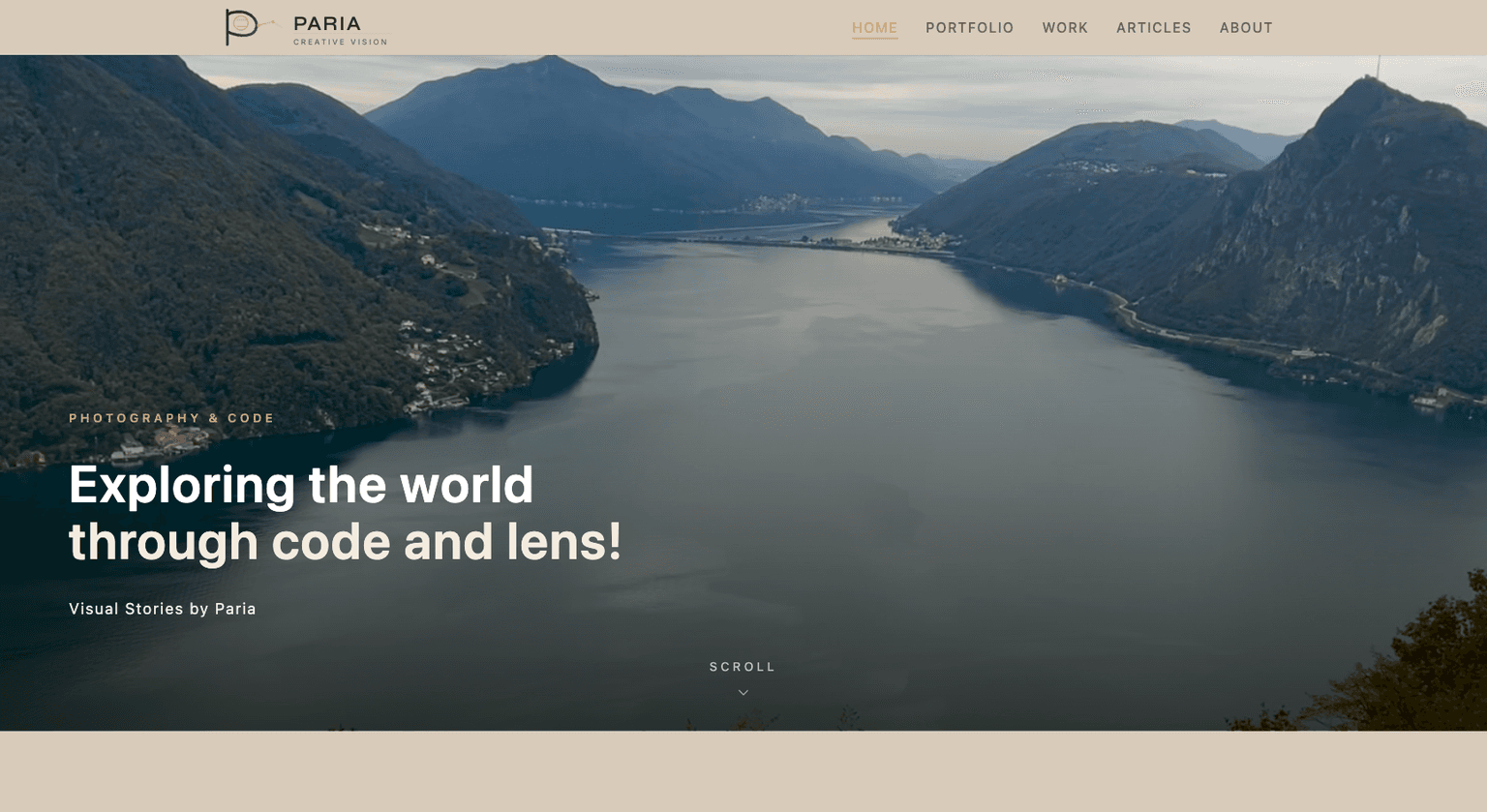
The format was the problem. Standard portfolio tools force a split between technical depth and visual identity. I treated the portfolio itself as a product problem and built accordingly.
Next.js App Router over Pages Router
Server Components allow data fetching without client-side waterfalls...
Supabase over a headless CMS
For the backend, I used Supabase, which provides a managed PostgreSQL database, storage, and an API layer. This let me focus on product features instead of infrastructure while still getting a typed, scalable backend out of the box. A key advantage was type safety: by generating TypeScript types directly from the database schema, queries become type-safe, refactoring becomes safer and more predictable, and frontend and backend stay in sync.
Custom design system over a component library
Using shadcn or MUI would hide the design thinking. Building tokens, typography scale, and components from scratch shows I can own the full visual layer.
CI/CD pipeline from day one
Every push to main runs lint, type check, and a full build before deploying to Vercel. Catching regressions early — even on a solo project — keeps the codebase production-ready at all times and mirrors the discipline expected in a team environment.
TypeScript strict mode from the start
No any, no shortcuts. Types are generated directly from the Supabase schema, so the database and frontend stay in sync automatically. Refactoring is safe, onboarding is faster, and bugs surface at compile time instead of in production.
Accessibility as a constraint — for everyone from the start
Semantic HTML, keyboard navigation, ARIA labels, and focus management in the lightbox were built in from the beginning — not added later. In markets like Norway where WCAG compliance is taken seriously, this is a baseline, not a bonus.
A live production site that serves as both a photography portfolio and an engineering case study.